
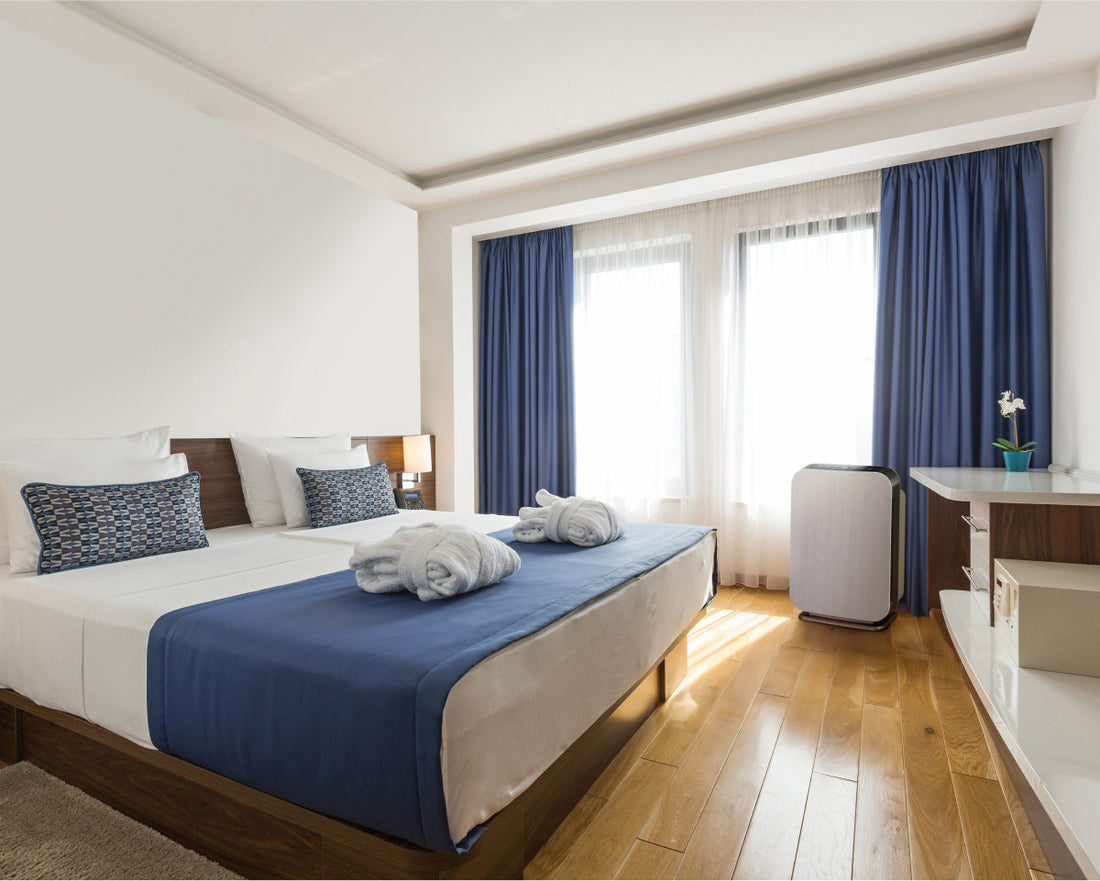
Air purifiers are great at purifying the air we breathe indoors. Did you know that placement of your air purifier makes a big difference in how well it cleans your air? Even the most powerful units can underperform if blocked by a wall or furniture. Whether you're targeting allergens, odors, or smoke, smart placement enables your unit to deliver fresh, pure air. We’ll walk you through where to place your air purifier so it does what it’s designed to do—enhance the air in your home air so you can breathe clean indoor air.
Does It Matter Where I Place My Air Purifier?

Absolutely. Did you know that placement is one of the most overlooked factors in air purifier performance? Poor positioning can limit how quickly and effectively it cleans the air—even with the most advanced models. Consider these factors when placing your air purifier:
- Room Size & Layout – Larger or oddly shaped spaces may require central placement or multiple units to ensure full coverage.
- Airflow Clearance – Allow at least 18 inches of clearance from the intakes. On Alen units, the output is the top and there shouldn’t be anything blocking it.
- Uninterrupted Air Loop – Obstructions such as curtains or furniture interrupt the airflow loop, so less air is cleaned. Clear the area around the intake and outlet vents.
- Intake/Outlet Orientation – Some purifiers pull in air from the front, sides, or base and release air from the top. Follow the manufacturer's guidance to keep intake paths clear. Place the unit so its intake faces the pollution source and the outlet dispurses clean air into an open space for broader circulation.
What is the Best Place to Put an Air Purifier?
No matter the size of your living space, there’s an ideal spot for your air purifier. Choose a central location in the room, with ample space around it and positioned near sources of airborne contaminants. Hang tight, we’ll get into the details:
Choose an Optimal Location
It’s all about the unit being able to circulate air in the room. If the wall is open, an Alen air purifier can effectively circulate the air in the room, even up against the wall. Placing it in the middle of the room—as opposed to behind the couch if it’s a living room—quickly helps keep the entire space fresher. Makes sense, right? Here are some other tips:
Avoid Obstructions
Obstructed airflow can reduce an air purifier’s effectiveness by up to 50%. That’s huge! The Environmental Protection Agency (EPA) advises watching out for long curtains, TV stands, shelving, or anything that impedes the intake vents. Aim for 1–2 feet of side clearance for intakes. Avoid placing anything over the unit’s top vent.
Elevate it if Necessary
Some air purifiers need to be elevated using a side table or plant stand to help filter particles where you need it most. Avoid setting it directly on thick carpet that can block bottom intakes. Tower units are the exception—they’re designed to sit on the floor and push clean air upward. It’s best to check the manual of your particular model.
Place it Near the Source of Pollution
Many of us don’t usually think about the source of contaminants, especially since they’re mostly invisible. For optimal performance, place the air purifier near the source of contaminants—the kitchen if you’re tackling cooking smells or a pet bed for dander. Angle the intake toward the pollutant and the clean-air outlet toward the rest of the room. Consider moving the air purifier to your bedroom at night to filter allergens while you sleep, then back to high-use areas during the day. Other common sources of contaminants include wood-burning stoves, gas ranges, and musty basements.
Where Do I Put My Air Purifier in My Bedroom?
Have you considered what you’re breathing while you’re sleeping? In your bedroom—where you spend many hours every night—you breathe whatever is floating in the air. What a thought. Don’t worry, though, strategic placement in a bedroom maximizes overnight relief from allergens, dust, and pet hair. Here are some suggestions:
- Consider placing the purifier near your nightstand, 3–6 feet from the headboard, to filter exhaled CO₂ and allergens.
- Placing the unit along an open wall is okay.
- Avoid placing it under a table or near heavy drapes.
Where Do I Put My Air Purifier in My Living Room?
Living rooms are a central point of home life. It’s where we spend time entertaining, lounging, and dining. It’s no surprise that a living room can be rife with pollutants like pet dander, smoke, or food odors. To get the most out of your home air purifier and ensure whole-room coverage in your living room, follow these simple placement tips:
- Position the air purifier centrally, such as beside a coffee table, in an open corner with airflow, or along a wall.
- Avoid placement behind or beside large furniture.
- Place on a stable surface at chest height if possible.
- Ensure the intake isn’t near heating vents or cold air returns to avoid air interference.
- Match your unit to your living room size. Alen’s BreatheSmart 45i, for example, covers a medium-sized room and the BreatheSmart 75i a large room.
Where Do I Put My Air Purifier in My Kitchen?
For most of us, our kitchens are used frequently and can become a hotspot for air pollutants such as odors, smoke, airborne gasses, and grease. And let’s not forget cooking odors—that’s right, especially if you enjoy cooking with spices. An air purifier can help capture volatile organic compounds (VOCs) and other contaminants that escape from stove-top ventilation or other byproducts. Alen’s Fresh and Odor filters have a HEPA layer and a filtration layer with carbon to capture gaseous contaminants—including odors. Here are some placement tips:
- Place the purifier away from direct heat and steam sources.
- Position the unit 6–10 feet from the stove or oven, with the intake facing the cooking area.
- Keep windows or range hoods open and working for additional ventilation.
Where Do I Put My Air Purifier in My Basement?
Whether for storage or your workout room, basements tend to trap moisture, dust, musty odors, and mold, according to the EPA. Strategic placement of your air purifier can help reduce allergens and mold spores that collect in these low-airflow environments:
- Place the purifier in the center of the basement or near common sources of odor like laundry or storage areas.
- Keep it off the floor using a table to avoid moisture damage.
- Ensure nearby vents and walls are not obstructing air intake.
- Choose a unit with the option of an activated carbon layer to absorb musty or chemical smells.
- Run continuously or on auto mode for best results in humid climates.
Final Thought
Finding the right spots for your air purifiers allows you to unlock their full potential to produce the cleanest air every day. Whether you’re battling seasonal allergies, cooking odors, or musty basement air, optimal placement can dramatically boost your purifier’s effectiveness. Remember to allow ample space and keep it near pollution sources. With thoughtful positioning and high-performance air purifiers like an Alen, you’ll enjoy cleaner, fresher air exactly where you need it most.
Air Purifier Placement FAQs
1. Should air purifiers be on the floor or elevated?
It depends on the model. Many air purifiers are designed for floor use and push clean air upward. Always check the manufacturer’s placement recommendation.
2. Where not to place an air purifier in the bedroom?
Avoid tight spots such as near drapes, or under tables or shelves. These spots limit airflow and reduce filtration efficiency. Keep it a few feet from your bed with space around all sides.
3. Should I move my air purifier around the house?
Yes, if you only have one unit, relocating it among areas—like the bedroom at night and the kitchen during the day—can help maintain clean air throughout your home. To avoid moving your units around, consider investing in multiple units for your home.


